

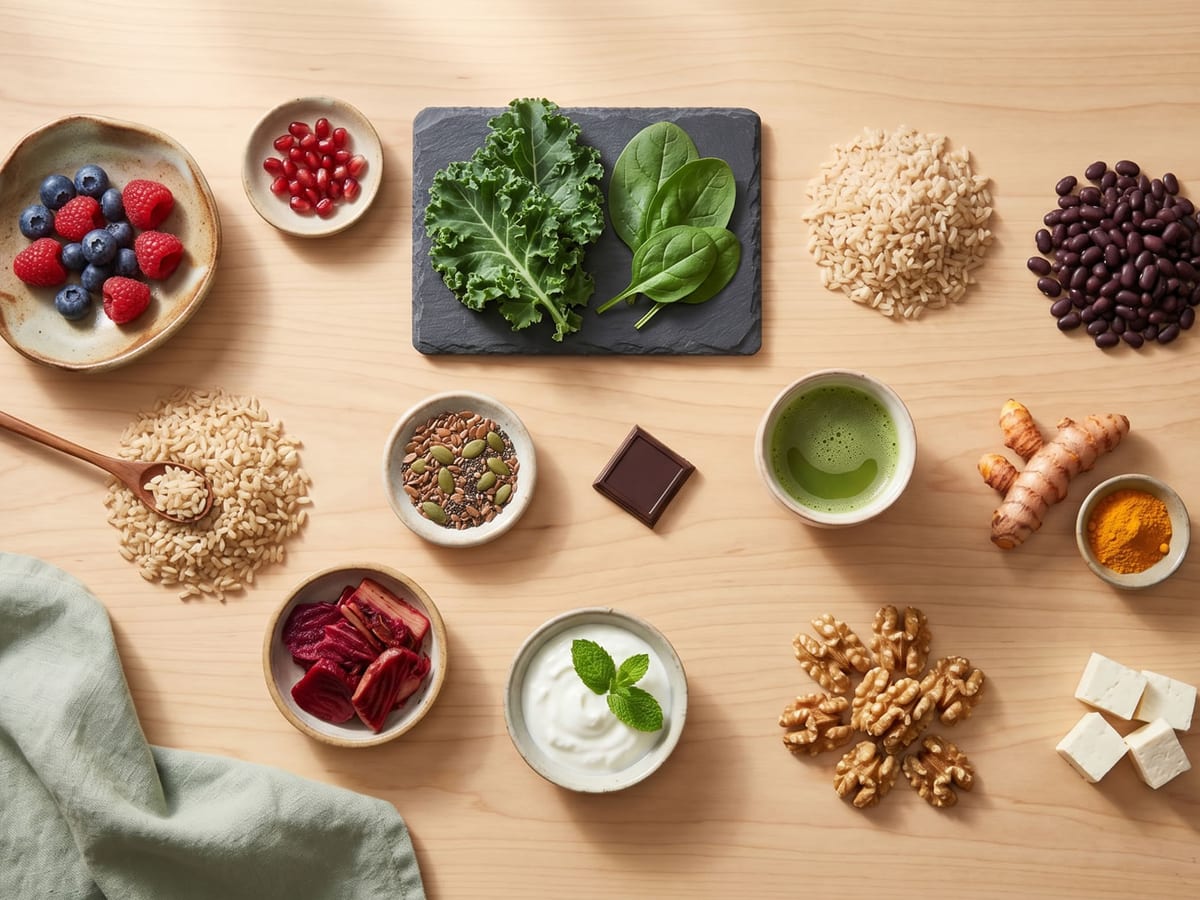
For most of clinical history, gut health was a digestive concern — useful to mention at the end of a consultation, rarely central to the plan. That has changed, and the change is not subtle. We now know the gut is not simply a digestive tube; it is an active interface between food, immunity, hormones, mood, and metabolic function. When patients arrive with stubborn weight, persistent fatigue, skin flare-ups, anxiety that resists every other intervention, or autoimmune symptoms that scans cannot explain, the gut is increasingly the first place to investigate — not the last. This is the practitioner’s field guide to what the science actually says, what the testing actually shows, and the clinical framework that turns “gut work” from a buzzword into a protocol that produces durable change.
The microbiome — what it actually does
The gut microbiome is the community of trillions of bacteria, fungi, archaea, and viruses living predominantly in the large intestine. The numbers alone make it remarkable — roughly 100 trillion organisms outnumber human cells by a meaningful ratio — but the function is what makes it clinically interesting.
A healthy, diverse microbiome produces short-chain fatty acids (butyrate, propionate, acetate) that feed colonocytes and maintain gut barrier integrity. It synthesises certain vitamins (K, B12, biotin, folate). It trains the immune system through ongoing dialogue with gut-associated lymphoid tissue. It metabolises plant compounds and pharmaceutical drugs in ways that change their bioavailability. It produces neurotransmitter precursors — roughly 90% of the body’s serotonin is synthesised in the gut. When that ecosystem is depleted or out of balance — a state called dysbiosis — the downstream effects rarely stay confined to the gut.
Diversity is the headline metric
The single most reliable predictor of microbiome health is diversity — the number of distinct species present and the evenness of their relative abundance. A diverse microbiome is more resilient to perturbation, more metabolically versatile, and more associated with positive health outcomes across every category studied. A patient eating thirty distinct plant foods a week consistently shows higher diversity than one eating ten, regardless of macronutrient profile. This is one of the cleanest food-as-medicine signals in nutrition science.
Why your microbiome is not your patient’s microbiome
Two patients on the same diet absorb different amounts of nutrition because their microbes are different. Two patients on the same antibiotic recover their flora at different speeds because their baseline diversity was different. Genetic variation matters here too — variants in immune signalling, mucin production, and bile acid metabolism shape what kind of ecosystem can establish in a given host. We cover the genetic side in our nutrigenomics primer; the practical clinical implication is that no two “gut healing protocols” should look identical.
When the gut goes wrong
Three patterns dominate the clinical presentations practitioners actually see.
Irritable Bowel Syndrome (IBS)
IBS affects 10–22% of Indian adults and is the most commonly diagnosed functional gut disorder worldwide. The presentation is a cluster — bloating, irregular bowel habits, abdominal discomfort, food sensitivities that shift week to week — and standard scopes and scans usually come back clean. That diagnostic emptiness is precisely why patients feel dismissed and why generic protocols struggle. Subtypes (IBS-D, IBS-C, IBS-M) often need almost opposite interventions, which is why “an IBS diet” downloaded from the internet so often fails.
Small Intestinal Bacterial Overgrowth (SIBO)
SIBO is a frequently missed driver of IBS-like symptoms — bacteria that should live in the colon migrating up into the small intestine and fermenting carbohydrates where they should not. The hallmark is post-meal bloating within an hour of eating (versus IBS bloating which builds across the day), often accompanied by fatigue and brain fog. Breath testing (lactulose or glucose substrate) is the diagnostic of choice. SIBO requires a different treatment sequence — eradication before prebiotic fibre loading, not after — and is one of the most common reasons “gut healing protocols” make patients worse before they make them better.
Intestinal permeability (“leaky gut”)
More accurately termed increased intestinal permeability, this describes a weakening of the tight junctions between cells lining the small intestine. When those junctions loosen, larger molecules and bacterial fragments can cross into circulation and trigger low-grade immune activation. Research links this state to autoimmune conditions, chronic skin issues, food sensitivities, and metabolic dysfunction — though the causal arrows are still being mapped. The clinical takeaway is consistent: gut integrity is a foundation, not a footnote.
What microbiome testing actually reveals
Modern microbiome panels sequence a stool sample to identify which bacteria are present and in what proportions. A useful report surfaces several things at once: overall diversity scores (Shannon and Simpson indices), the balance between protective and inflammation-associated genera, levels of short-chain-fatty-acid producers, and markers suggesting overgrowth or deficiency in specific niches.
The point is not to diagnose disease from a stool sample — it is to see the terrain you are working with. A plan built on real data looks different from a generic protocol. You can target the prebiotic fibres a patient’s microbes can actually ferment, choose the right fermented foods to introduce, time interventions correctly, and avoid pushing strategies that will simply feed the wrong populations.
Testing has limits worth respecting. It samples one moment from one stool — and the microbiome shifts within days. It tells you what is present but not always what is metabolically active. It does not directly measure intestinal permeability (that requires zonulin or lactulose/mannitol testing). Used as one input among several, it is powerful. Used as a single source of truth, it overpromises.
The clinical framework for gut restoration
The most durable framework in functional gut medicine is the 5R approach — Remove, Replace, Reinoculate, Repair, Rebalance. The order matters more than the elements.
Remove
Identify and reduce inputs that are perpetuating the dysbiosis — food triggers (often gluten, dairy, alcohol, ultra-processed foods, and specific FODMAPs depending on testing), unnecessary medications where possible (chronic PPI use, frequent antibiotics, NSAIDs), and pathogens identified on testing. Removing inputs before introducing new ones prevents the “I added probiotics and feel worse” pattern that so often derails patients in the first month.
Replace
Restore the digestive support that has been compromised — hydrochloric acid, digestive enzymes, bile acids — particularly in patients on long-term acid-suppression therapy. This is the most overlooked stage. A patient cannot rebuild a healthy ecosystem if their digestion is not extracting nutrients from food in the first place.
Reinoculate
This is where evidence-based probiotic and prebiotic strategy enters. Strain matters enormously — covered in detail in our piece on probiotic strain specificity. Prebiotic fibre introduction should be gradual, particularly in SIBO-positive patients or those with severe dysbiosis where rapid loading produces bloating and discouragement. Fermented foods (curd, kimchi, sauerkraut, kombucha) are introduced based on tolerance, not protocol.
Repair
Support the gut lining directly — adequate protein for mucosal turnover (typically 1.2–1.6 g/kg in repair phases), L-glutamine where indicated, zinc carnosine, deglycyrrhizinated liquorice, and slippery elm or marshmallow root in tinctures. The repair stage is also where polyphenol-rich foods earn their place — quercetin, curcumin, EGCG, anthocyanins from berries — modulating inflammation and supporting barrier integrity.
Rebalance
The final and most important stage — building the lifestyle that maintains the new ecosystem. Sleep quality (the microbiome has its own circadian rhythm), stress regulation (chronic stress measurably reduces microbial diversity), movement (sedentary patients lose diversity faster), and meal timing all shape what the gut becomes long-term. Without this stage, the protocol rebuilds the same dysbiosis after the supplements stop.
Gut work is where the gap between generic wellness content and practitioner-grade clinical thinking shows up most clearly. The “gut-healing diet” downloaded from the internet has the same flaw as the “weight-loss diet” or the “anti-inflammatory diet” — it ignores the human in front of you. Two patients with identical IBS-D diagnoses may need almost opposite interventions; one needs more soluble fibre, the other needs to pull it back temporarily while addressing overgrowth. Testing surfaces that distinction. Clinical judgement applies it. At Horta Nutrition, we integrate microbiome data, blood work, and lifestyle context into personalised gut-restoration plans for practitioners in our network — and when supplementation is indicated, we manufacture the gut-targeted formulations ourselves under GMP-compliant protocols, so practitioners know exactly what they are recommending.